

A Grounded Approach to
Sound Therapy
Sound can be beautiful, intense, spacious, calming, and deeply restorative.
My work with sound is grounded in listening, vibration, musicality, atmosphere, and care. It comes from years of music, performance, facilitation, sound therapy training, instrument-making, and a lifelong interest in how sound affects people in real rooms.
I am interested in Sound Therapy as a serious, developing field. One that can be human and immersive, while also being clear, ethical, and professionally trustworthy.
On this page
Click on any topic above to learn more.
What I Mean by Sound Therapy
Sound Therapy, as I practise it, is the intentional use of live sound to support rest, reflection, regulation, and personal wellbeing.
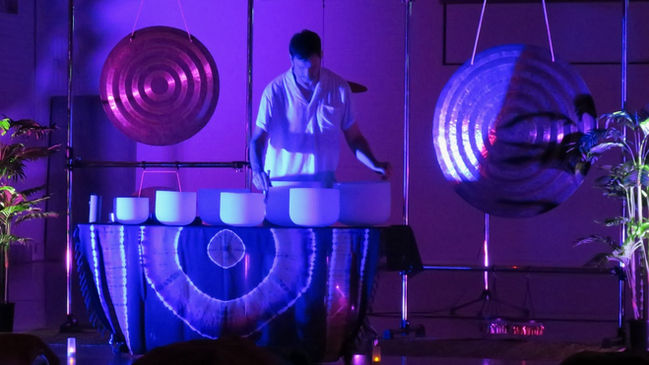
A session may include gongs, singing bowls, percussion, chimes, voice, silence, space, and carefully shaped soundscapes.
The instruments matter. So does the way they are played.
A sound session is shaped through timing, volume, texture, contrast, silence, sensitivity, and the living relationship between the room, the people present, and the moment itself.
In many sessions, I am also supporting people toward the natural edge between waking and sleep. This is often called the hypnagogic state. Everyone moves through this state in ordinary life, especially while falling asleep. The related waking-up state is sometimes called the hypnopompic state.
I work with this edge because it can support deep rest, soften ordinary mental effort, and open a different quality of attention. Research has also linked early sleep-onset states with creativity and more associative forms of thinking. (PMC)
For me, this is part of the deeper value of Sound Therapy. It is carefully shaped sound that helps create the conditions for rest, listening, and a different state of awareness.

Sound as a Human Experience
Sound is heard, felt, and imagined.
It moves through the air as vibration. It enters through the ears. It can also be felt through the body, through the floor, and through the space around us.
Live sound is different from sound coming through speakers. It has depth, direction, movement, pressure, and presence. It surrounds the body in a way that recorded sound can only partly reproduce.
Sound can also work with imagination.
A skilled musician can suggest a feeling, image, landscape, movement, or atmosphere without literally spelling it out. Sometimes the mind completes the sound. Sometimes the imagination becomes part of the experience.
Another reason I value Sound Therapy is that it can bypass ordinary language. A person does not need to explain, analyse, talk, or engage the thinking mind in the usual way. They can listen and rest in the sound without effort.
A practitioner can also use sound to create tension and release. Some sounds may feel unresolved before they move toward rest, softness, or peace. This is part of how music and sound create emotional movement
Silence and the Whole Listening Environment
Silence is an important part of sound.
It is the beginning and end of a sound bath. It also marks transitions within the session and gives the room time to breathe.
In my sessions, the sound bath begins before I play the first instrument. I invite people to notice the sounds already present: cars passing outside, birds, rain, wind, the creak of the building, insects or small animals nearby, and the breathing or movement of people around them.
These sounds become part of the listening environment.
Then my instruments enter that environment.
This helps the session feel connected to the room, the building, the weather, the people, and the wider world around us.

What Gives the Work Its Shape
My work is shaped by musicality, sound craft, and therapeutic care.
Musicality gives the work timing, flow, contrast, tension, release, sensitivity, and form.
Sound craft brings a deep understanding of how instruments behave: how materials vibrate, how rooms respond, how silence changes the sound, and how unusual instruments can bring new qualities into a session.
Therapeutic care gives the work its responsibility. It includes clear guidance, participant choice, steady pacing, appropriate volume, and the ability to read the room.
Reading the room is a musician’s skill as much as a therapeutic one. It means sensing where the group is, how much intensity they can receive, when the room needs less, and when the sound can open further.
I am interested in sound that is beautiful, but also considered.
Sound that can move people, while still being carefully held.
Clear Boundaries
My practice has clear boundaries.
I avoid chakra systems, Solfeggio frequency claims, 432Hz spiritual claims, astrology, reiki, Schumann resonance claims, and the concept that one specific frequency heals one specific part of the body.
I also avoid diagnostic claims, medical promises, and language that suggests sound can cure specific conditions.
Sound can affect people in positive and meaningful ways. People may feel calmer, clearer, lighter, more settled, more rested, emotionally moved, or more connected with themselves after a session. These experiences matter.
Careful language protects the work. It helps keep the focus on what can be honestly offered. That is, that sound, vibration, listening, rest, attention, atmosphere, emotional space, and a well-held sound environment can affect the body and mind.
Why This Matters
I care about the future of Sound Therapy.
I have strong respect for fields such as Music Therapy and Art Therapy, where practice, training, ethics, and research have helped the work become more clearly understood.
Sound Therapy is its own field, and I believe it needs its own careful development.
For the field to mature, it needs clearer language, better education, stronger professional boundaries, and a thoughtful relationship with research.
Personal experience matters. It tells us what a person felt, noticed, or received.
Professional practice matters. It shapes how the work is facilitated, explained, and held.
Clinical evidence matters. It helps clarify what can be responsibly studied, supported, and claimed.
Sound Therapy needs respect for all three.
That is the direction I want my work to keep moving toward.
Sound Therapy and Belief
People experience sound in different ways.
For some people, a sound bath may feel spiritual. For others, it may feel emotional, physical, creative, meditative, restful, or simply beautiful.
The experience does not ask anyone to adopt a new belief system. It allows each person to receive the sound through their own conscience, faith, worldview, and personal understanding.
The Larger Work of Sound
My relationship with sound is broader than sound baths alone.
I am interested in the discovery, development, experimentation, and practical exploration of sound.
I am interested in how sound is made, how it behaves, how it fills a room, and how different materials create different textures. I make instruments, collect unusual sound objects, study percussion, explore synthesisers, and listen closely to the qualities different sounds can carry.
I am also interested in how sound can bring a concept, feeling, image, or atmosphere into the mind.
Every instrument has a character. Some sounds feel spacious. Some feel earthy. Some feel bright, fragile, ancient, warm, strange, playful, or still. I choose, make, and work with instruments according to the quality they bring to a particular moment.
That is part of the craft.
The larger work is the ongoing exploration of sound: how it moves, what it evokes, how it can be shaped, and how it can support people in real rooms.

Who This Approach Is For
This approach may suit people and organisations looking for:
-
grounded Sound Therapy in Brisbane, South East Queensland, and beyond
-
Sound Therapy with clear professional boundaries
-
sound baths without spiritual pressure
-
live sound experiences for deep rest
-
online sound baths or online Sound Therapy
-
professional sound sessions for workplaces and groups
-
sound-based wellbeing sessions with clear facilitation
-
musician-led work with gongs, bowls, percussion, and immersive listening
-
a practitioner interested in the future professional development of Sound Therapy
Frequently Asked Questions
Closing
Sound can be beautiful, clear, dark, spacious, intense, calming, and restorative.
It can use tension and release.
It can gently stir feeling, then lead toward rest.
It can be personal while respecting each person’s beliefs.
It can be therapeutic when held with care, clear language, and appropriate boundaries.
It can be professional without losing its humanity.
This is the approach I am building: grounded, careful, immersive Sound Therapy for people and organisations who want sound to be taken seriously.

Participant Reviews
It's a great experience. You feel the soothing vibrations from the gong awaken your every fibre. Tom Schache is such a great guy and makes you feel cared for and totally at ease.
- Collene